Small Loft Storage Ideas That Don't Feel Like a Clutter Dump
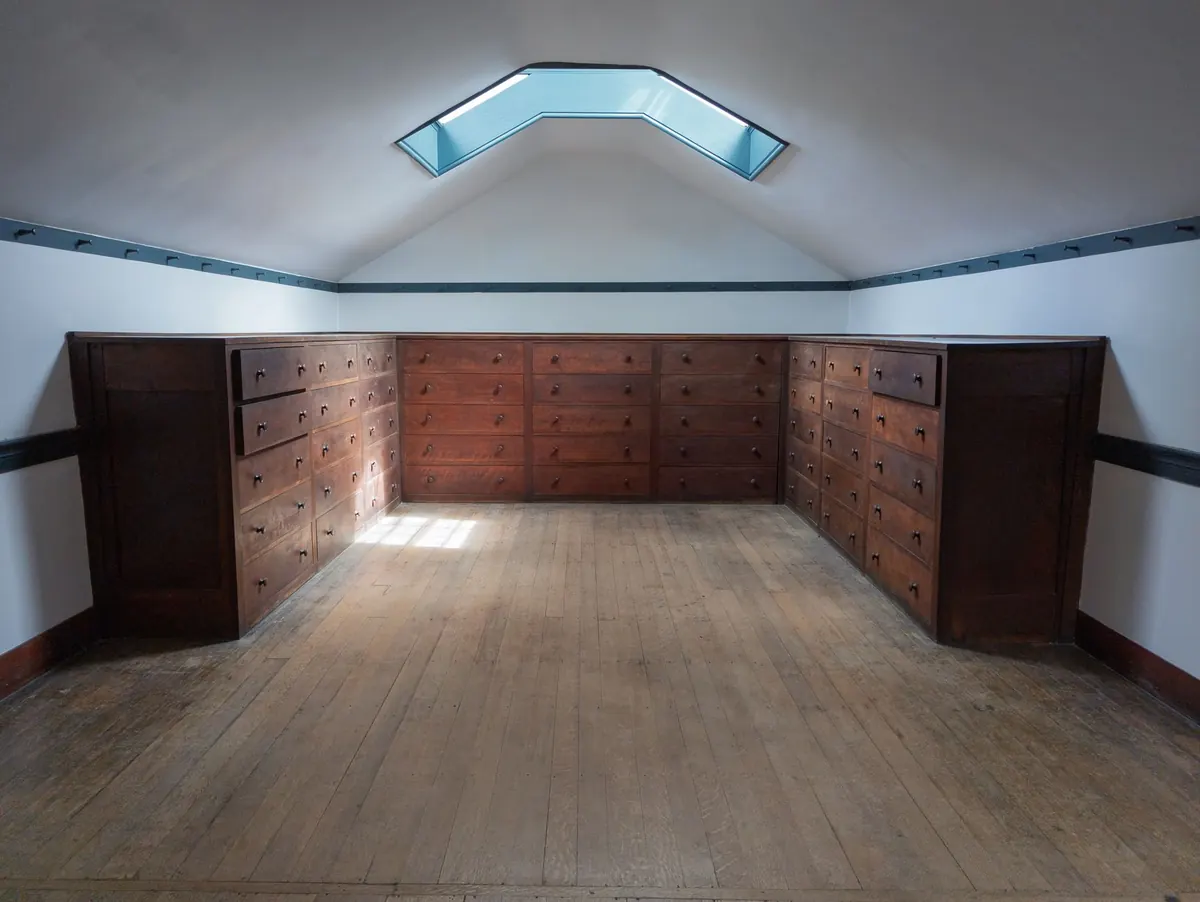
A loft has a habit of becoming the place where things go to be forgotten — the suitcases, the box of baby clothes, the decorations nobody has opened since 2019. Left alone, it turns into a dumping ground within a fortnight of the plaster drying. Handled with a little thought, the same space swallows a remarkable amount and still looks like a room. The awkward parts, in fact, are the ones that work hardest.
The eaves are where the storage actually is
Almost every small loft has two long, low zones behind the knee walls, and they are usually wasted. Usable depth varies with roof pitch, joist position and how the insulation was installed, but plenty of houses give somewhere between 60cm and 1.2m along each side. That is enough for suitcases, seasonal clothing, files, board games and the boxes you open twice a year.
Line the space before you fill it. A ply or MDF lining fixed to the rafters and the back of the knee wall keeps dust and insulation fibres off your belongings, and gives you something solid to screw hooks and shelves into. Leave the airflow alone, though: roof voids need to breathe, so don't block soffit vents and don't squash insulation flat to buy yourself a few extra centimetres.
For access, the tidiest option is a run of low doors set into the knee wall and painted the same colour as the wall, so they read as panelling rather than storage. Sliding panels suit tight spots where a hinged door would swing into the room. Where the eaves are too shallow to open sideways, lift-up hatches set flush into the floor work well, provided you leave a clear strip to stand on.
One caution before you start loading: ceiling joists are not always sized to carry stored weight. If you plan to board out a large area or keep anything heavy up there, ask a structural engineer or your local building control team what the floor can safely take. It is a cheap conversation compared with the alternative.
Built-in wardrobes that follow the slope
The single biggest improvement in a small loft is joinery built to the roofline rather than a freestanding wardrobe shoved against it. A run with a raked top, a full-height face and doors that stop short of the ceiling looks deliberate, and it captures the triangle of space above head height that flat-pack furniture simply cannot use.
Get the internals right first
Decide what you are actually hanging before you agree the layout. Shirts and jackets need roughly a metre of drop; trousers can hang doubled on two rails; long coats and dresses want about 1.5m. Below that, drawers use the space far better than another rail nobody can reach. Above, deep shelves for bedding, boxes and the things you need twice a year.
Doors, handles and light
Hinged doors give full access and look sharp, but they need clearance to open. Sliding doors save the swing and hide half the contents at any given moment. Whichever you choose, keep handles small and consistent across the run — a mix of sizes is what makes storage look makeshift. Two LED strips inside, switched at the door, cost very little and stop you rummaging blind at the back.
Furniture that earns its footprint
In a loft, low and wide beats tall and narrow every time. An ottoman bed or a divan with drawers absorbs the bulky items — spare duvets, winter coats, off-season bedding — without eating floor space. A window seat with a lift-up lid does the same job while giving you somewhere to sit. A slim desk run along a low wall, with drawers underneath and a shallow shelf above, turns dead space under a slope into a workable corner.
The test is simple. If a piece of furniture touches the floor and stores nothing, it is costing you room you don't have.
Rules that keep a small loft tidy
Storage fails when everything is allowed in. A few habits do most of the work:
- Store by category, not by "misc". A box labelled "spare bedding" gets used; a box labelled "odds and ends" gets opened, sighed at and closed again.
- Use clear or labelled boxes at a consistent size. Uniform boxes stack properly and make the best use of shallow eaves.
- Keep the front third for regular access. Anything you need monthly belongs near the hatch or door, not at the far end of a run.
- Rotate seasonally. Swap winter and summer items twice a year rather than doubling up on storage.
- One in, one out. If a new box arrives, something leaves.
- Leave a walkway. Being able to reach the back without climbing over things is what separates a store room from a heap.
Finish it like a room, not a cupboard
Paint the inside of eaves cupboards and wardrobes the same colour as the surrounding walls. It sounds trivial; it makes the difference between built-in and bolted-on. Seal the gaps where dust drifts in from the roof void, and lay something over bare boards — vinyl offcuts and carpet remnants both work — so the floor is easy to sweep and kind to your knees.
Lighting matters too. A single pendant bulb in the middle of a loft throws shadows into every corner you actually need to see. Wall lights or a strip along the ridge, plus lights inside the cupboards, make the space feel considered rather than improvised.
What belongs up there — and what doesn't
Lofts are dry, but they are also subject to bigger temperature swings than the rest of the house, so treat them accordingly. Suitcases, clothing in breathable bags, paperwork in sealed crates, decorations, sports kit and spare bedding all do well. Photographs, instruments, anything made of leather, and items with sentimental value are safer somewhere with steadier conditions. Paint tins, solvents and anything flammable should not live next to a hot water cylinder or roof window, and a small lockable box for documents is worth having if the loft is easily reached.
Start with one wall
Before you order anything, spend an evening measuring. Note the height at the knee wall, the depth available and the position of joists, pipes and the hatch. Then clear everything out, sort it into categories, and count how much you are genuinely storing — that number, not a guess, should shape what you build. Do the worst wall first, live with it for a month, and see what annoys you. Storage that gets used the way you actually live is worth more than storage that simply looks neat in a photograph.
Photo: Benjamin White / Pexels